


 PLATFORM UPDATE:


Polarity-determined triple partition of dual binding pockets unlocks mechanistic insights and a novel antagonist design of NMDA receptors: a combined MD/DFT study
 abc
Bingkun
Chen,
abc
abc
Bingkun
Chen,
abc
Abstract
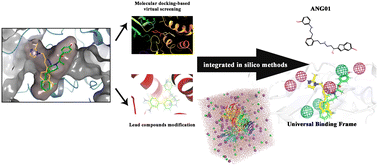
N-Methyl-D-aspartate (NMDA) receptors are key glutamate-gated ion channels regulating synaptic plasticity and cognition, which are critically associated with neurodegenerative diseases through dysregulation-induced excitotoxicity, yet their existing antagonists suffer from poor binding affinity, unfavorable safety and low selectivity. Current research studies on NMDA receptors focus mainly on the primary binding pocket, with the secondary binding pocket remaining largely unexplored. The focus of this study is to gain mechanistic insights into the dual binding pockets and establish a universal binding frame and ligand modification strategies, thereby designing novel ligands occupying both pockets with enhanced binding affinity and selectivity through a combination of molecular dynamics (MD) simulations, ABFE/RBFE calculations and quantum calculations. 500 ns MD simulations were performed on 22 NMDA protein–ligand complexes, and 24 groups of key interactions were quantified via DFT calculations. As a result, a polarity-determined triple partition hypothesis was proposed based on the comprehensive analysis of key residues within dual binding pockets, with three termini (A, N, and G) featuring their distinct regions. Novel mechanistic insights including polarity selectivity and an elongation strategy were applied in the modification and design of new antagonists with the guidance of the above-mentioned hypothesis. The newly designed ligand ANG01 integrated the complementary binding advantages of both pockets, demonstrating a significantly enhanced binding affinity.
 Please wait while we load your content...


