


 PLATFORM UPDATE:


Towards greener reduced graphene oxide: a critical review of environmentally driven reduction strategies

Abstract
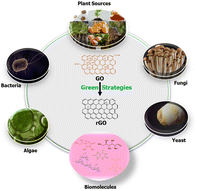
The synthesis of graphene-based materials has attracted immense interest due to their exceptional properties. However, graphene oxide (GO), a common precursor, contains oxygen-containing functional groups that disrupt its sp2 carbon network, thereby limiting its electrical conductivity and other key properties. The reduction of GO to reduced graphene oxide (rGO) is therefore a crucial step in restoring these properties. Traditional reduction methods often use toxic, hazardous chemical reagents, such as hydrazine, which pose significant environmental and health risks. Consequently, there is a pressing need for environmentally benign, sustainable, and cost-effective reduction strategies. This review provides a critical examination of green reduction methods for GO, focusing on plant extracts, microorganisms, and isolated biomolecules as sustainable reducing agents. It moves beyond a simple summary of existing literature to offer a comparative analysis of these methods, evaluating their reduction efficacy based on key material properties, such as the C/O ratio, electrical conductivity, and structural integrity, as determined by spectroscopic and microscopic techniques (UV-vis, XRD, Raman, XPS, SEM, TEM). The central focus of this review is to establish a clear link between the choice of green reduction strategy, the resulting physicochemical properties of the rGO, and its performance in specific technological applications, including energy storage, sensing, environmental remediation, and biomedicine. By analyzing reaction mechanisms, scalability, and application-specific outcomes, this review identifies current research gaps and provides a forward-looking perspective on the rational design of green-synthesized rGO for advanced, sustainable technologies.
- This article is part of the themed collection: 2026 Reviews in RSC Advances
 Please wait while we load your content...


