


 PLATFORM UPDATE:


Fabrication of methotrexate conjugated multi-walled carbon nanotubes for the evaluation of cytotoxic potential at biochemical and molecular level modulating BAX, BCL-2 and telomerase expression

Abstract
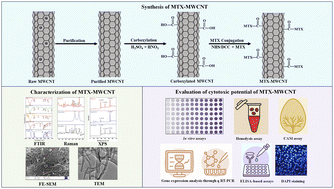
Cancer is one of the leading causes of mortality all across the world, and the clinical applications of numerous chemotherapeutic agents are limited by major side effects. Among these, methotrexate (MTX) is a widely used anticancer drug which exhibits certain limitations related to biocompatibility and solubility. Therefore, to address these limitations, MTX was covalently conjugated to multi-walled carbon nanotubes (MWCNTs) to develop a stable and targeted nanotherapeutic system. MWCNTs were first subjected to purification followed by carboxylation which was validated through dispersion solubility test. MTX-MWCNT was then subjected to characterization to validate successful conjugation after which the cytotoxic potential of MTX-MWCNT was assessed by cell viability assay on MCF-7 (hormone-positive breast cancer), MDA-MB 231 (triple-negative breast cancer), and HeLa (cervical cancer) cells. The evaluation of safety profile and hemocompatibility was done using non-cancerous HEK 293T (human embryonic kidney) cells and in vitro hemolysis assay respectively. The cytotoxic potential of MTX-MWCNT was assessed through cell viability assay which demonstrated a dose-dependent reduction in cancer cell viability after treatment with MTX-MWCNTs with minimal toxicity toward normal cells and blood. The anti-angiogenic potential of MTX-MWCNT was also tested further through ex vivo chick chorioallantoic membrane (CAM) assay which revealed significant reduction in vessel branching. The cytotoxic activity of MTX-MWCNT was also confirmed by biochemical assays, including cell proliferation assay, glucose estimation assay, and total antioxidant status (TAS). Moreover, the cytotoxic potential of MTX-MWCNT was further assessed at the gene level through quantitative reverse transcription polymerase chain reaction (qRT-PCR) analysis which demonstrated upregulation of the pro-apoptotic BAX gene and downregulation of the anti-apoptotic BCL-2 gene. Furthermore, kit-based enzyme-linked immunosorbent assay (ELISA) quantification further confirmed increased BAX, decreased BCL-2, and reduced telomerase protein expression. Lastly, the alteration in nuclear morphology in all three cancer cells post treatment with MTX-MWCNTs was evaluated through 4′,6-diamidino-2-phenylindole (DAPI) staining followed by fluorescence microscopy. Collectively, the obtained findings highlight that MTX-MWCNT efficiently induces apoptosis and inhibits angiogenesis while maintaining significant biosafety, establishing it as an emerging nanoscale platform for targeted cancer therapy.
 Please wait while we load your content...


