


 PLATFORM UPDATE:


Intravital microscopy for nanomedicine: investigating nanoparticle–tissue interactions in the native state

Abstract
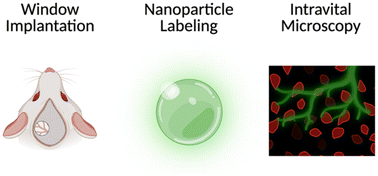
Nanomedicine is an evolving field that employs nanoparticles (NPs) for drug delivery systems, molecular imaging, and therapeutic interventions. However, characterizing NP–cell interactions poses significant challenges, mainly due to the limitations of traditional postmortem histological methods, such as immunofluorescence staining. These techniques yield a single time-point analysis and include lengthy preprocessing steps that can induce artifacts and alter tissue architecture. They result in the clearance of blood components, preventing the evaluation of circulating NPs. Moreover, the rapid sequestration of NPs by organs, particularly the liver and spleen, limits the understanding of their biodistribution and pharmacokinetic profiles. In this context, intravital microscopy (IVM) has emerged as a unique imaging technology that allows real-time visualization of NP behavior within living organisms. By maintaining the physiological context, IVM enables the investigation of NP circulation, tissue accumulation, and cellular interactions at the microscopic scale. This review focuses on the recent uses of IVM to investigate NP–cell interactions in nanomedicine, highlighting its impact on advancing knowledge of NP dynamics, uptake, and the development of more targeted NP-based therapies.
 Please wait while we load your content...


