Issue 5, 2026

Construction of a nanozyme composite drug delivery system based on columbianadin for inflammatory bowel disease therapy

Abstract

Inflammatory bowel disease (IBD) is characterized by chronic gastrointestinal inflammation driven by oxidative stress and immune dysregulation. This study develops a novel oral nanozyme composite drug delivery system (MXene/CBN@GelMA, MCG) designed for targeted therapy of IBD. The composite integrates antioxidative MXene nanosheets and anti-inflammatory columbianadin (CBN) into a gelatin methacryloyl (GelMA) hydrogel, enabling targeted delivery and therapy. MCG efficiently scavenges reactive oxygen species (ROS) and generates oxygen (O2) through a superoxide dismutase (SOD)-catalase (CAT) cascade reaction, thereby alleviating oxidative stress and mitigating hypoxia in the inflamed tissues. In a dextran sulfate sodium (DSS)-induced IBD model, MCG treatment significantly reduced disease activity, restored colon length, preserved mucosal integrity, and suppressed pro-inflammatory pathways. Transcriptomic analysis revealed that MCG reversed IBD-associated gene expression dysregulation and modulated immune-related pathways. The system demonstrated high biocompatibility and effective targeting, providing a synergistic therapeutic strategy for IBD through antioxidative and anti-inflammatory mechanisms.
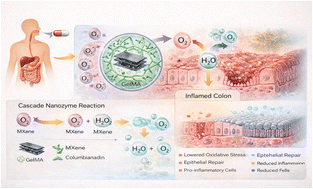
Graphical abstract: Construction of a nanozyme composite drug delivery system based on columbianadin for inflammatory bowel disease therapy

Supplementary files

Article information

Article type
Paper
Submitted
13 Nov 2025
Accepted
23 Dec 2025
First published
21 Jan 2026
This article is Open Access
Creative Commons BY-NC license

RSC Adv., 2026,16, 4640-4654

Construction of a nanozyme composite drug delivery system based on columbianadin for inflammatory bowel disease therapy

Y. Zhang, H. Xi, D. Qin, P. Cao, S. Yang, J. Yin, T. Li and L. Ding, RSC Adv., 2026, 16, 4640 DOI: 10.1039/D5RA08772D

This article is licensed under a Creative Commons Attribution-NonCommercial 3.0 Unported Licence. You can use material from this article in other publications, without requesting further permission from the RSC, provided that the correct acknowledgement is given and it is not used for commercial purposes.

To request permission to reproduce material from this article in a commercial publication, please go to the Copyright Clearance Center request page.

If you are an author contributing to an RSC publication, you do not need to request permission provided correct acknowledgement is given.

If you are the author of this article, you do not need to request permission to reproduce figures and diagrams provided correct acknowledgement is given. If you want to reproduce the whole article in a third-party commercial publication (excluding your thesis/dissertation for which permission is not required) please go to the Copyright Clearance Center request page.

Read more about how to correctly acknowledge RSC content.

Social activity

Spotlight

Advertisements