


 PLATFORM UPDATE:


Chemical composition and ecological adaptation of Populus (Salicaceae) species and hybrids depending on soil and environmental conditions

Abstract
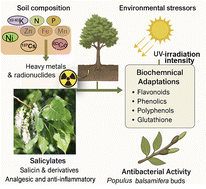
This review synthesizes two decades of research on the interplay between soil properties and genotype in shaping the chemical composition and adaptive traits of hybrid poplars (Populus spp.). The present review is grounded in a comprehensive survey of peer-reviewed literature published from 2000 to 2025. Out of approximately 400 identified documents, 100 were chosen according to their scientific validity, methodological soundness, and pertinence to the study's objectives. The search strategy incorporated databases including PubMed, PubChem, Google Scholar, Scopus, and ResearchGate, using keyword combinations such as Populus species & soil, Populus species & ecological role, and Populus species & pollutant uptake. Unlike previous summaries, it advances the field by highlighting novel insights into genotype soil–metabolite interactions, demonstrating how macro- and micro-nutrient uptake influences the accumulation of flavonoids, salicylates, and other polyphenolic derivatives. It also examines how trees respond to soil pH, organic matter, and contamination, including radionuclides, and how feedback via rhizosphere microbiomes and leaf litter decomposition regulates nutrient cycling and microbial biomass. Beyond integration, the review identifies critical gaps, notably the lack of long-term field validation of soil–microbiome–metabolite linkages and the need for directed breeding of poplar varieties with specific metabolite traits. By outlining how selective breeding, metabolomics, and chemical modification of plant-derived compounds can be harnessed for bio-based materials and pharmaceuticals, and by providing region-specific case studies in urban greening, phytoremediation, bioenergy, and agroforestry, this synthesis establishes a framework for translating biochemical insights into applied strategies for ecosystem restoration and sustainable land use.
- This article is part of the themed collection: 2026 Reviews in RSC Advances
 Please wait while we load your content...


