


 PLATFORM UPDATE:

Fly ash upcycling to functional silica nanomaterials: insights into synthetic strategies towards efficient adsorbents for water purification

Abstract
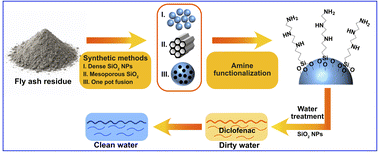
The transformation of fly ash into high-value nanomaterials presents a sustainable route for waste valorization. In this study, silica nanoparticles were synthesized from fly ash using three different methods: acid-precipitation of dense silica, surfactant-templated sol–gel synthesis for mesoporous silica, and a one-pot thermal activation process integrating silica extraction and nanoparticle formation. The resulting nanomaterials were functionalized with amine ligand to enhance their affinity toward anionic pharmaceutical pollutants in water. Physicochemical characterization confirmed successful silica formation and surface modification. The mesoporous silica exhibited a specific surface area of 620 m2 g−1 and well-defined pore architecture, in contrast to the denser or less-ordered structures obtained by the other two approaches. The materials were evaluated for adsorption of diclofenac, a commonly detected anionic water pollutant. Uptake experiments revealed that both the kinetics and capacity of adsorption were influenced by the degree of functionalization and pore accessibility. The surfactant-templated mesoporous silica displayed the most effective removal, achieving rapid initial adsorption and high capacity. This study offers a side-by-side comparison of scalable pathways for producing high-performance adsorbents from industrial waste. The findings provide insight into how synthetic strategy selection can tailor physicochemical properties, guiding the design of fly ash-derived materials for environmental remediation and other functional applications.
 Please wait while we load your content...


