


 PLATFORM UPDATE:


Mechanistic perspectives on antimalarial agents: from FDA-approved drugs to next-generation candidates

Abstract
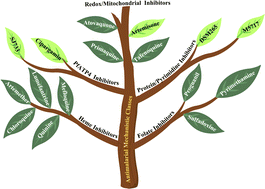
Malaria is a major global health challenge, demanding continued innovation in drug discovery and development. This review gives a comprehensive overview of FDA-approved antimalarial drugs and emerging clinical candidates, focusing their chemical structures, mechanisms of action, and molecular targets such as PfATP4, DHFR, DHODH, and PfCRT. The discussion showcases structure–activity relationships, mechanisms underlying drug resistance, and recent advances in structure-guided design of next-generation antimalarials. The review also summarizes the year of approval, mechanistic class, and synthetic origin of key therapeutic agents. Moreover, novel molecules currently in preclinical and clinical trials are discussed in the context of their mode of action, efficacy, and potential for overcoming resistance. Collectively, this article bridges medicinal chemistry insights with biological mechanisms, outlining future directions in the rational design of potent, resistance-resilient antimalarial drugs.
- This article is part of the themed collection: 2026 Reviews in RSC Advances
 Please wait while we load your content...


