


 PLATFORM UPDATE:

Decyl glucoside as a sustainable surfactant for cosmetic formulations: environmental stability under hardness, pH, and temperature variations
 *i
*i
Abstract
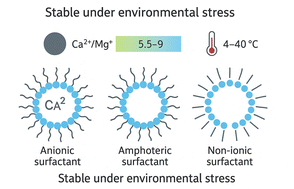
Environmental variability (including fluctuations in water hardness, pH, and temperature) can markedly affect the performance and stability of surfactants in cosmetic formulations. This study systematically evaluates the environmental robustness of three representative surfactants—Sodium Lauryl Ether Sulfate (SLES, anionic), Cocamidopropyl Betaine (CAPB, amphoteric), and Decyl glucoside (non-ionic)—with a focus on the sustainable performance of decyl glucoside in diverse conditions. Physicochemical parameters including surface tension, critical micelle concentration (CMC), viscosity, and physical stability were analyzed across hardness levels (0–400 mg per L CaCO3), pH (5.5–9.0), and temperatures (4–40 °C). SLES exhibited pronounced sensitivity to hard water, showing increased surface tension (32.5 → 36.8 mN m−1) and elevated CMC (0.25 → 0.45 mM), resulting in precipitation and reduced viscosity. CAPB demonstrated moderate resilience (CMC 0.15–0.24 mM), while decyl glucoside maintained stable physicochemical behavior (CMC ≈ 1.0 mM) regardless of ionic or thermal stress. Statistical analyses (ANOVA, p < 0.01) confirmed significant environmental effects on ionic surfactants but not on decyl glucoside. Mechanistic interpretation based on ion–micelle interactions revealed that the non-ionic structure of decyl glucoside prevents cation binding and aggregation, ensuring consistent interfacial activity and viscosity. The results highlight decyl glucoside's superior environmental stability, biodegradability, and formulation compatibility, positioning it as an ideal candidate for next-generation eco-friendly cosmetics. This work advances the understanding of surfactant–environment interactions and supports sustainable formulation design aligned with green chemistry principles.
 Please wait while we load your content...


