


 PLATFORM UPDATE:


Geographic and breed-specific traceability of cashmere via mineral element profiling in Inner Mongolia (Ordos, Chifeng, and Alxa League)
 abc
abc
Abstract
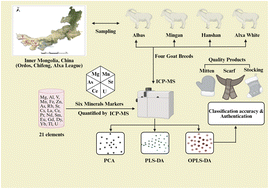
The study investigates a consistent technique for tracing the cashmere breeds and their geographical origins using mineral element fingerprinting from Inner Mongolia, China. 237 cashmere samples were collected from three different regions (Ordos, Chifeng and Alxa League) and four breeds (Albas, Mingan, Hanshan, Alxa white cashmere goats). Concentrations of 21 mineral elements were quantified by inductively coupled plasma mass spectrometry (ICP-MS) and assessed using multivariate statistical methods such as principal component analysis (PCA), partial least squares discriminant analysis (PLS-DA), and orthogonal partial least squares-discriminant analysis (OPLS-DA). Among them, six elements (Mg, Mn, As, Sr, Ce and U; with Ce in regions and Sr in breeds, while the other five are common) discriminated significant regional and breed-specific differences (P < 0.05). Their concentrations ranged from 189.25–639.49 µg g−1, 7.48–16.24 µg g−1, 19.03–66.73 µg/100 g, 311.26–888.30 µg/100 g, 56.03–113.92 µg/100 g and 1.64–9.87 µg/100 g respectively across the regions with highly enriched Alxa samples. These six mineral elements served as key identifiers for traceability with high variable importance in projection (VIP > 1.0). The OPLS-DA model achieved excellent classification accuracy for both origin (R2 = 0.97) and breeds (R2 = 0.787). This novel study presents an integrated ICP-MS and OPLS-DA approach for authenticating geographical origins and breeds, providing a robust analytical basis for preventing fraud, certifying products and ensuring supply chain transparency in the luxury textile sector.
 Please wait while we load your content...


