


 PLATFORM UPDATE:


Empowering women's health with miRNA-integrated nanochemical approaches: from reproductive health to cancer care

Abstract
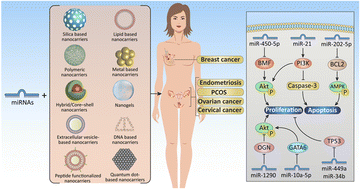
MicroRNAs (miRNAs), a category of small (18–25 nucleotides) non-coding transcripts that modulate gene expression at the post-transcriptional level, are necessary for regulatory processes in female reproduction, specifically in ovarian function and follicular development. Dysregulation of these miRNAs is implicated in reproductive disorders like PCOS, endometriosis, and gynecological cancers. Nanotechnology in medicine encompasses the study of the properties and uses of nanomaterials to enable the development of more precise therapeutic techniques, including biosensing and diagnostics, targeted medication delivery, and tissue engineering. In this review, the recent advancements in utilizing nano-based technologies accompanied by miRNAs, including polymeric nanostructures, metallic nanoparticles (NPs), extracellular vesicle (EV) mimetics, DNA-based nanostructures, and lipid-based nanostructures, to treat conditions like endometriosis and PCOS or breast, cervical, and ovarian cancers and their limitations are discussed. Despite the reported improvements, clinical translation is hampered by challenges related to long-term stability, scalability, and immune recognition. Future research should focus on improving hybrid nanocarrier systems and miRNA-based precision medicine to improve treatment outcomes for women's health.
- This article is part of the themed collection: 2026 Reviews in RSC Advances
 Please wait while we load your content...


