


 PLATFORM UPDATE:

Highly selective sensing of tetracycline by fluorescent carbon dots derived from spent coffee grounds via a green microwave route
 *a
*a
Abstract
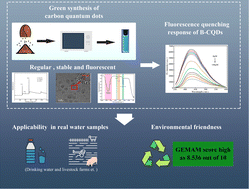
Tetracycline (TC), a widely used broad-spectrum antibiotic, can accumulate in ecosystems through environmental release, posing risks to ecological security and human health. This study presents a green and efficient microwave-assisted method for synthesizing fluorescent carbon quantum dots (B-CQDs) using spent coffee grounds as a precursor. The as-prepared B-CQDs were employed as a fluorescent probe for the highly selective detection of TC in water. Characterization results revealed that the B-CQDs possess good water dispersibility, high fluorescence stability, and a relatively high quantum yield of 11.2%. Under optimal conditions, B-CQDs exhibited a highly selective fluorescence quenching response towards TC, with a linear detection range of 0–140 µmol L−1 and a low detection limit (LOD) of 0.36 µmol L−1. Mechanistic investigations indicated that the quenching process is primarily attributed to the synergistic effect of the inner filter effect (IFE) and static quenching. The practicality of the method was demonstrated by analyzing TC in real water samples (tap water, lake water, and swine farm wastewater), achieving satisfactory spike recoveries of 98.8–105.5% with relative standard deviations (RSD) below 3.53%, confirming its good accuracy and practical applicability. Furthermore, the greenness of the proposed method was evaluated using the Greenness Evaluation Metric for Analytical Methods (GEMAM) system, yielding an excellent comprehensive score of 8.536 out of 10, which underscores its superior environmental friendliness. This work not only demonstrates a pathway for the valorization of waste biomass but also provides a green detection methodology and a potential high-performance sensing material foundation for the environmental monitoring of tetracycline antibiotics.
- This article is part of the themed collection: 2025 RSC Advances Popular Advances Collection
 Please wait while we load your content...


