


 PLATFORM UPDATE:

Unlocking the potential of mandelic acid derivatives: chemical and biological applications – a comprehensive review†

Abstract
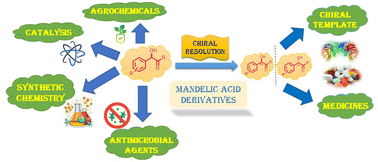
Mandelic acid, an aromatic α-hydroxy acid first identified in 1831, has become a valuable scaffold in synthetic, medicinal, and industrial chemistry. Its aromatic ring, carboxylic acid group, and stereogenic centre provide a rare combination of chemical reactivity and stereochemical control, enabling the creation of structurally diverse and biologically active molecules. Enantiomer-specific derivatives find targeted pharmaceutical uses, with the R-form applied in the synthesis of cephalosporins, penicillin, anticancer agents, and anti-obesity drugs, and the S-form in the preparation of nonsteroidal anti-inflammatory agents. Beyond therapeutics, mandelic acid derivatives are important in catalysis, chiral separations, cosmetics, analytical chemistry, and materials science. They display a wide spectrum of biological activities, including antimicrobial, antiviral, antifungal, anticancer, anti-inflammatory, and enzyme-inhibitory properties, often enhanced through incorporation into heterocycles, hybrid frameworks, and polymeric systems. This review consolidates advances in the synthesis of bioactive derivatives such as factor Xa inhibitors, anti-HIV agents, dual-action anti-inflammatory and antimicrobial compounds, pyrazole–mandelic acid hybrids, thiazolidinone-based carbonic anhydrase IX inhibitors, oxadiazothioether antifungal agents, and plant pathogen virulence disruptors. It also highlights catalytic roles, separation technologies, and advanced material applications. Structure–activity relationship insights, emerging trends, and key challenges are discussed to guide the rational design of next-generation mandelic acid derivatives with enhanced chemical and biological potential.
- This article is part of the themed collection: 2026 Reviews in RSC Advances
 Please wait while we load your content...


