


 PLATFORM UPDATE:


Green synthesis of magnesium oxide nanoparticles using Nigella sativa seed extract: characterization, in vitro antioxidant activities, and wound healing efficacy in streptozotocin-induced diabetic rats
 ab
ab
Abstract
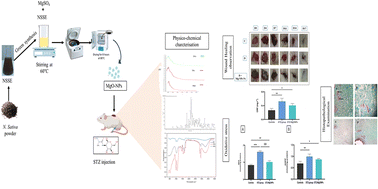
This study investigated the green synthesis of magnesium oxide nanoparticles (MgO-NPs) using Nigella sativa (N. Sativa) seed extract and evaluated their antioxidant and wound healing properties in diabetic rats. N. sativa seeds (black cumin) were extracted with distilled water, and this extract was then used for the biosynthesis of MgO-NPs, characterized by a color change and subsequent centrifugation and drying. The successful formation and characteristics of the nanoparticles were confirmed using UV-Vis spectrophotometry, UHPLC-ToF-MS analysis, Fourier-transform infrared (FTIR) spectroscopy and scanning electron microscopy (SEM). The synthesized MgO-NPs were assessed for their in vitro antioxidant activity using reducing power and ABTS radical scavenging assays. Furthermore, the in vivo wound healing efficacy was examined in streptozotocin-induced diabetic Wistar rats. An excision wound model was established, and MgO-NPs were topically applied daily. Wound contraction was monitored over 17 days, and biochemical parameters such as C-reactive protein, lipid peroxidation, advanced oxidation protein products, GSH, non-protein thiols, and antioxidant enzyme activities (CAT, SOD, GPx) were measured in serum and tissue samples. As a result, a significant acceleration of wound healing was observed in diabetic rats treated with MgO-NPs, as evidenced by a reduction in wound diameter and decreased CRP levels (−22%) compared to the control group, as well as a modulation of enzymatic and non-enzymatic antioxidants, which was further confirmed by histological analysis. Considering our outcomes, MgO-NPs could be used as an effective dressing material as well as a tissue regrowth scaffold for diabetic wound therapy.
 Please wait while we load your content...


