


 PLATFORM UPDATE:


Green preparation of shell-based biochar and its adsorption of multi-component chlorinated volatile organic compounds
 *b
*b
Abstract
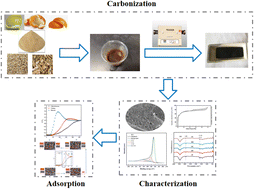
This study applies a green method combining sodium phytate and sodium hydroxide to prepare hierarchical porous biochar from shell-based biomass waste (e.g., pomelo peel, mandarin orange peel, orange peel, rice husk, and peanut shell). The resulting biochars have specific surface areas exceeding 2300 m2 g−1, with saturated adsorption capacities for chlorobenzene greater than 530 mg g−1. The pomelo peel-derived biochar exhibited an exceptionally high chlorobenzene adsorption capacity of 572.5 mg g−1. This outstanding performance is related to its high specific surface area (2331.19 m2 g−1), large micropore-specific surface area (1038.13 m2 g−1) and micropore volume (0.51 cm3 g−1), appropriate micro–mesoporous hierarchical structure (micropores accounting for 36.43%), abundant surface oxygen-containing functional groups, and disordered-graphitized microcrystalline structure. Volatile organic compound (VOC) adsorption experiments show that chlorobenzene adsorption has a distinct competitive advantage over benzene and toluene. This is attributed to its lower saturated vapor pressure, stronger polar interactions, smaller molecular kinetic diameter, and greater affinity and better matching with the available adsorption sites on the pomelo peel-derived biochar. By implementing green modification strategies, this work demonstrates high-value utilization of agricultural waste. The prepared hierarchical porous biochar exhibits excellent performance and significant application potential in the remediation of chlorinated VOCs, thus providing a novel pathway for the development of highly efficient VOC adsorption materials.
 Please wait while we load your content...


