


 PLATFORM UPDATE:

Construction of recyclable homogeneous heterogeneous nanocones for enhanced photocatalytic uranium removal
 a
a
Abstract
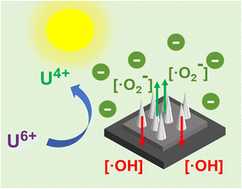
The rapid expansion of nuclear power generation has played a crucial role in ensuring the sustainable utilization of global energy resources; however, it has concurrently intensified the risk of contamination from nuclear wastewater. Uranium, as the principal component of nuclear waste, poses significant environmental challenges. Photocatalytic adsorption has emerged as a promising method for the effective removal of dissolved uranium from aqueous solutions. Nonetheless, currently available photocatalytic materials predominantly exist in powder or coating forms, which limits their efficiency in rapidly capturing uranium within flowing nuclear wastewater. In response to this limitation, the present study reports the development of a novel catalytic architecture comprising homogeneous heterogeneous titanium dioxide (TiO2) nanocones coupled with multilayer carbon fibers. Specifically, the homogeneous heterojunction formed between anatase-phase TiO2 nanoparticles and rutile-phase nanocones facilitates efficient electron transport, while the multilayer support structure not only enhances recyclability but also improves the interfacial contact area for the reaction process. This catalyst demonstrates remarkable performance by removing approximately 92.97% of uranium from 100 mg L−1 uranium-containing wastewater within 10 minutes and exhibits rapid regeneration capability, maintaining over 90% uranium removal efficiency after 10 consecutive cycles. This work offers an effective strategy for uranium removal from wastewater, thereby contributing to the environmental sustainability of the nuclear energy industry.
 Please wait while we load your content...


