


 PLATFORM UPDATE:


Optimization of Oliveria decumbens essential oil nanoemulsion formulation using RSM and development of a bioactive film based on Plantago ovata mucilage
 *a
and
*a
and
Abstract
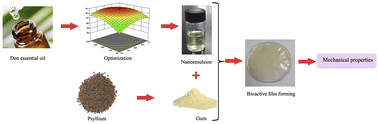
The aim of this study was to optimize the conditions for the preparation of Oliveria decumbens essential oil (OEO) nanoemulsion by response surface methodology using ultrasonic technique. Considering droplet size as the response, the optimal conditions for nanoemulsion fabrication were obtained with a sonication amplitude of 21.2%, sonication time of 9.53 min and surfactant-to-oil ratio of 3.88. Under these conditions, the particle size of the nanoemulsion was 76.6 ± 0.81 nm, the polydispersity index was 0.206 ± 0.02, and the zeta potential was −1.45 ± 2.15 mV. The concentrations of oil and surfactant were found to significantly influence the droplet size of the nanoemulsion. The optimized nanoemulsion was characterized for its antioxidant, antimicrobial activity and morphology. In addition, a bioactive edible film based on Plantago ovata gum incorporating 5, 10 and 15% OEO nanoemulsion was developed. Mechanical and physical characteristics of prepared films namely film thickness, tensile strength, water solubility, water vapor permeability were evaluated. The elongation at break increased and the tensile strength of the films significantly decreased when the nanoemulsion was incorporated. Considering the antimicrobial and antioxidant properties of the fabricated edible films based on Plantago ovata gum and OEO (POMG/OEO), they have good potential for extending the shelf life of food products.
 Please wait while we load your content...


