


 PLATFORM UPDATE:


Atomically dispersed high-loading metals and metalloids on a graphene quantum dot-support for selective electrochemical desulfurization

Abstract
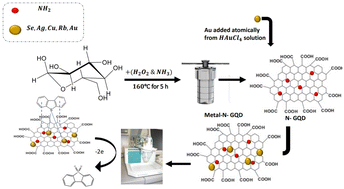
The amendment of electronic structures in heterogeneous catalysts has mainly been established as one of the most efficient approaches for enhancing catalytic performances in redox reactions. Herein, nitrogen-doped graphene quantum dot nanosheets with atomically dispersed metal-based nanocomposites were fabricated through a facile route and designed for the oxidative desulfurization of dibenzothiophene (DBT). The electron-enriched structure of metal-based nanocomposites is endowed with remarkable intrinsic oxidative desulfurization activities. The catalysts were characterized by FTIR, X-ray powder diffraction (XRD), field emission scanning electron microscopes (FESEMs), energy-dispersive spectroscopy (EDS), Raman spectroscopy and photoluminescence spectroscopy. This study focuses on the role of atomically dispersed metals in desulfurization treatments. As talented candidates, metal-N-GQD catalysts with metal atoms present as atomically dispersed metals (Au, Ag, Rb, Se, and Cu) were investigated as model catalysts. Based on the data obtained, the most quenching result refers to gold, which suggests that Au occupies almost all the available sites on the catalytic surface. The results established that the noncatalytic process has a greater execution in the high-impact oxidation of dibenzothiophene (DBT). This indicates that the mechanism of DBT adsorption on modified GQDs is affected by both the surface chemistry and pore structure of the adsorbents.
- This article is part of the themed collection: 2026 RSC Advances Popular Advances Collection
 Please wait while we load your content...


