


 PLATFORM UPDATE:


Engineering hybrid microgels: from rational design to next-generation smart materials

Abstract
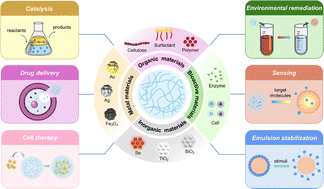
Hybrid microgels represent advanced soft colloidal materials engineered by incorporating diverse functional components, such as metal nanoparticles, inorganic non-metals, organics, metal–organic frameworks (MOFs), and biomolecules, within crosslinked polymer networks. By synergistically combining the intrinsic stimuli-responsiveness and dispersibility of pristine microgels with the unique properties of incorporated functional units (e.g., photothermal effects, magnetic responsiveness, and bioactivity), hybrid materials effectively overcome the inherent limitations of conventional microgels, such as insufficient mechanical strength, restricted functionality, and poor stability in complex environments. This review systematically outlines key fabrication strategies (in situ hybridization, seed-mediated growth, and microfluidics), classifies hybrid microgels according to incorporated components (metal-hybrid, inorganic non-metallic hybrid, organic hybrid, MOF-hybrid, biohybrid, and multi-component hybrid), and elucidates their structure–property relationships. Leveraging recent advances in fabrication optimization and property regulation, we highlight emerging applications of hybrid microgels, including catalysis, drug delivery, cell therapy, environmental remediation, sensing, and emulsion stabilization. Furthermore, we discuss persistent challenges in the development of hybrid microgels, emphasizing the need for large-scale production, advanced characterization, biosafety evaluation, and multi-stimuli integration to accelerate the translation of hybrid microgels from fundamental research to practical applications.
- This article is part of the themed collections: The 40th anniversary of College of Chemistry &Environmental Engineering of Shenzhen University, 2024 Materials Chemistry Frontiers HOT articles and 2024 Materials Chemistry Frontiers Review-type Articles
 Please wait while we load your content...


