


 PLATFORM UPDATE:


Radiolytic synthesis of rGO–PEDOT nanohybrids with enhanced functional properties
 *a
Matthieu
Gervais,
c
Jaspreet Kaur
Randhawa,
d
Prem Felix
Siril
e
and
Samy
Remita
*af
*a
Matthieu
Gervais,
c
Jaspreet Kaur
Randhawa,
d
Prem Felix
Siril
e
and
Samy
Remita
*af
Abstract
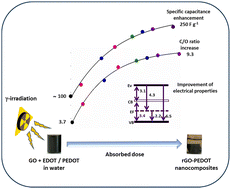
Hybrid reduced graphene oxide–poly(3,4-ethylenedioxythiophene) (rGO–PEDOT) nanocomposites were synthesized via green gamma-radiolysis under ambient conditions, without dopants or catalysts. Three distinct synthesis routes—including one-step simultaneous radiation induced reduction of aqueous graphene oxide (GO) and EDOT monomers and two-step approaches involving the reduction of GO in the presence of pre-formed PEDOT oligomers or polymers—were explored to assess the impact of absorbed dose and polymerization stage on the physicochemical and functional properties of the resulting materials. Extensive characterization techniques revealed that gamma-irradiation promotes effective GO reduction and controlled PEDOT polymerization, leading to significant band gap narrowing, enhanced structural ordering, and substantial increase in the carbon-to-oxygen atomic ratio (from 3.7 to 9.3) indicative of effective reduction and improved conjugation within the nanocomposites. Visual evolution confirmed kinetic-controlled composite formation, yielding hydrogel-like aggregates. Morphological analyses showed well-dispersed PEDOT on rGO sheets, contributing to improved thermal stability, enhanced optoelectronic properties and superior electrochemical performance. The composites exhibited enhanced specific capacitances up to ∼248 F g−1, surpassing many reported PEDOT-based materials, attributed to the synergistic combination of rGO's conductive network and PEDOT's pseudocapacitance. This green, catalyst-free, and scalable methodology offers a promising platform for fabricating multifunctional hybrid materials with potential applications in flexible electronics, energy storage devices, and sensing technologies.
 Please wait while we load your content...


