


 PLATFORM UPDATE:


NiCo–CuCo layered double hydroxides for ultra-low-potential biomass upgrading: enhancing the oxidation ability of Co3+
 *ab
*ab
Abstract
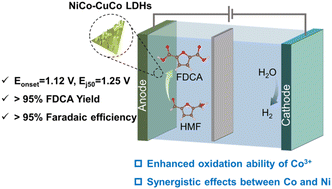
Electrochemical upgrading of 5-hydroxymethylfurfural (HMF) into 2,5-furandicarboxylic acid (FDCA) offers a sustainable route to bio-based monomers. In the HMFOR, enhancing the intrinsic activity of Co3+ sites to facilitate the kinetically sluggish hydroxyl oxidation step remains a critical challenge for Co-based catalysts. In this work, a series of NiCo–CuCo LDHs, Ni–CuCo LDHs, and Co–CuCo LDHs are constructed through an etching–deposition strategy. Among them, the NiCo–CuCo LDHs exhibit an ultra-low onset potential at 1.12 V and reach 50 mA cm−2 at only 1.25 V, which surpasses most catalysts reported to date. Moreover, the NiCo–CuCo LDHs show a high FDCA yield (>95%) and faradaic efficiency (>95%). Combined electrochemical measurements, in situ characterization, and theoretical calculations demonstrate that the incorporation of Ni regulates the electronic structure of Co sites, optimizes the Co d-band center, and lowers the energy barrier of the rate-determining step, thus enhancing the intrinsic oxidation capability of Co sites toward hydroxyl groups during the HMFOR. In addition, the synergistic interaction between Co and Ni further accelerates the reaction kinetics. This study provides valuable insights for developing high-performance HMFOR catalysts.
 Please wait while we load your content...


