


 PLATFORM UPDATE:


Electrode/electrolyte interface design for multifunctional zinc–iodine batteries

Abstract
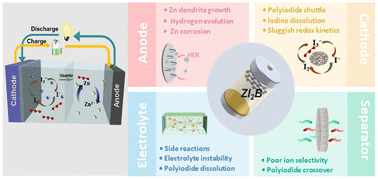
Aqueous zinc–iodine batteries (AZI2Bs) have attracted considerable attention owing to their high theoretical capacity, intrinsic safety, and unique iodine-based redox chemistry. However, their practical application is still hindered by severe interfacial challenges, including rapid self-discharge, polyiodide shuttling at the iodine cathode, zinc dendrite growth and hydrogen evolution at the anode, as well as pronounced electrode–electrolyte crosstalk. This review systematically summarizes recent advances in interfacial engineering for AZI2Bs from both cathode and anode perspectives. For the iodine cathode, we critically discuss approaches such as porous confinement, catalytic regulation, functional interlayers, and electrolyte solvation control. For the zinc anode, we highlight progress in structural design, artificial solid–electrolyte interphases, molecular adsorption layers, and functional electrolytes. Particular emphasis is placed on cathode–anode synergistic optimization and electrolyte-mediated coupling effects. In addition, the multifunctional characteristics enabled by iodine redox chemistry, such as electrochromism, visualized energy storage level, and wearable functionalities, are briefly reviewed. By integrating interfacial mechanisms with material design principles, this review provides comprehensive insights into rational engineering of AZI2Bs and offers guidance for the development of high-performance and multifunctional aqueous iodine-based energy storage systems.
- This article is part of the themed collections: 2026 Inorganic Chemistry Frontiers Review-type Articles and Celebrating George Whitesides’ 85th birthday
 Please wait while we load your content...


