


 PLATFORM UPDATE:


Ni0.7Co0.3P nanoparticle-loaded MnCo2S4 yolk–shell nanoflowers with a Z-scheme heterojunction for efficient photocatalytic hydrogen evolution
 *ac
Jishu
Han
*ab
and
*ac
Jishu
Han
*ab
and
Abstract
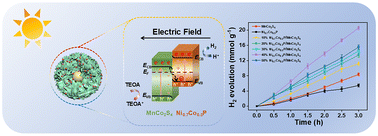
Hydrogen, a source of clean energy, has great potential for applications in the field of renewable energy. Developing low-cost, high-efficiency composite photocatalysts with high performance and good stability characteristics has broad application prospects. In this study, the Ni0.7Co0.3P/MnCo2S4 composite photocatalysts were prepared by the in situ deposition of Ni0.7Co0.3P nanoparticles on the surface of the MnCo2S4 yolk–shell nanoflowers derived from MnCo-layered double hydroxide. The hydrogen production performance of the photocatalysts was modified by regulating the Co-dopant amount in Ni1−xCoxP and the loading amount of Ni0.7Co0.3P. The measurements illustrated that the hydrogen generation rate of Ni0.7Co0.3P/MnCo2S4 under visible light irradiation was markedly increased and the composite photocatalyst maintained good stability. The modification of Ni0.7Co0.3P helped to enhance its light absorption capacity, thus providing more active sites. Meanwhile, the Z-scheme heterojunction formed between MnCo2S4 and Ni0.7Co0.3P could expedite the shift of photogenerated carriers, limit the recombination of photogenerated electrons and holes and contribute to H2 production. This work affords a novel approach for the development of high-performance composite photocatalysts.
 Please wait while we load your content...


