


 PLATFORM UPDATE:


Strain-controlled decomposition efficiency of LaCoO3 perovskite epitaxial thin films

Abstract
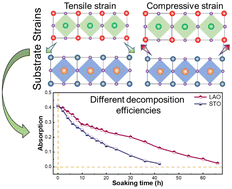
Strain engineering has emerged as a powerful strategy for optimizing the material structure and enhancing performance across a wide range of applications. Herein, we report the deployment of substrate-imposed strain to govern the dissolution kinetics of an epitaxial sacrificial layer. The epitaxial LaCoO3 (LCO) has been employed as a sacrificial layer: a lattice-matched and environmentally benign perovskite for releasing freestanding oxide membranes. Intriguingly, the decomposition efficiency of LCO can be precisely controlled by the substrate strain, whether tensile or compressive, which can induce changes in chemical bonds and lattice distortion, thereby altering the reactivity of LCO with the decomposition solution. Under a tensile strain of 2.09% on SrTiO3 substrate, the decomposition efficiency of LCO was accelerated by 66.7% compared with that on LaAlO3 substrate with compressive strain. Synchrotron X-ray absorption spectroscopy, high-angle annular dark-field scanning transmission electron microscopy and semi-in situ optical absorption spectra reveal that tensile strain reduces La–O bond energy and enhances octahedral distortion, making the lattice more susceptible to collapse. Furthermore, freestanding PbZrO3 films were fabricated using the LCO sacrificial layer, showing a ferroelectric-to-antiferroelectric transition. These findings underscore the potential of strain engineering in controlling material properties and fabrication processes, offering new strategies for developing flexible electronic devices.
- This article is part of the themed collection: FOCUS: Perovskite Materials and Devices
 Please wait while we load your content...


