


 PLATFORM UPDATE:


Zinc-based coordination exchange in epoxy networks cured via frontal polymerization

Abstract
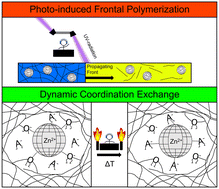
Frontal polymerization (FP) provides high conversion, short reaction times, and excellent energy efficiency, making it an attractive method for the synthesis of polymeric materials. Epoxy resins represent a particularly relevant class of polymers due to their outstanding thermal and chemical resistance. However, their highly crosslinked nature hinders reprocessing, recycling, and repair, which poses significant challenges to sustainability. In this work, FP is combined with the concept of dynamic polymer networks to produce an epoxy-based material incorporating Zn2+ ions, enabling coordination-based bond exchange. The zinc content was systematically varied between 0, 2.5, 5, and 10 mol%. Characterization of the frontal parameters revealed consistently high propagation velocities, which decreased only at elevated zinc contents due to dark curing effects. Swelling experiments revealed a decrease in swelling degree with increasing Zn content, whereas the gel content remained nearly constant regardless of zinc concentration. Rheological measurements of a network with 5 mol% zinc salt showed a linear Arrhenius-type temperature dependence (R2 = 0.99), indicating thermally activated exchange dynamics. Variation of the zinc counter anion further revealed that relaxation behavior correlates with coordination strength of the anion rather than with cation acidity. These results suggest that coordination exchange between Zn2+ and the network's datively bound functional groups is the predominant exchange mechanism. Furthermore, the strength of these coordination-exchange interactions could be demonstrated through the successful thermal welding of two samples.
- This article is part of the themed collections: Polymer Chemistry Open Access Spotlight 2026 and Dynamic Polymer Networks
 Please wait while we load your content...


