


 PLATFORM UPDATE:


A divergent synthetic route to functional copolymer libraries via modular polymers

Abstract
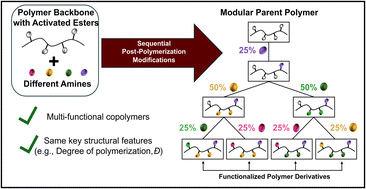
High-throughput polymer synthesis enables rapid exploration of chemical space but remains limited by batch-to-batch inconsistencies that can obscure structure–property relationship trends. To address this challenge, we developed a synthetic approach to produce multifunctional copolymers using post-polymerization modification of activated ester modular polymers with commercially available amines. Easily derivitized parent polymers—poly(tetrafluorophenyl acrylate) and poly(tetrafluorophenyl styrene sulfonate)—were synthesized by RAFT polymerization to yield single polymer batches containing highly reactive tetrafluorophenyl esters or sulfonate esters on each repeat unit. Tuning post-polymerization modification reaction conditions enabled the addition of sub-stoichiometric amounts of amines (relative to the repeat unit) to yield partially functionalized intermediates that could then be further derivatized. Reaction monitoring by 19F NMR spectroscopy confirmed good control over these sequential post-polymerization modifications. This synthetic route produced a variety of copolymers with defined comonomer ratios while preserving the underlying polymer structure (degree of polymerization, dispersity, tacticity) for both the acrylate and styrene sulfonate backbones. We further applied this approach in a divergent manner to create a small library of structurally distinct copolymers from a single parent batch in three synthetic steps. This modular, divergent synthesis demonstrates a general route to structurally consistent copolymer libraries that enable systematic studies of structure–property relationships and can accelerate functional materials discovery.
- This article is part of the themed collections: Polymer Chemistry Emerging Investigators, Polymer Chemistry Open Access Spotlight 2026 and Polymer Chemistry Emerging Investigators Series
 Please wait while we load your content...


