


 PLATFORM UPDATE:


Organo-catalyzed deamination of polystyrene sulfonamide for diverse post-polymerization modification of styrenic polymers
 a
Laure V.
Kayser
*ab
a
Laure V.
Kayser
*ab
Abstract
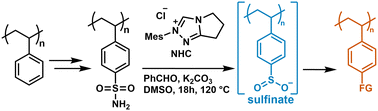
Post-polymerization modification allows for the incorporation of functional groups that would otherwise be incompatible with polymerization conditions, enhancing synthetic efficiency and facilitating the creation of complex polymer architectures for specialized applications, such as biomedical devices, electronics, and advanced coatings. Herein, we report a method inspired by late-stage functionalization of small molecules for the post-polymerization modification of aromatic polymers, specifically polystyrene (PS), under mild reaction conditions. First, PS was converted to polystyrene sulfonamide (PSSNH2) with an 85% yield using established procedures. PSSNH2 was subsequently transformed into a reactive sulfinate by deamination using an N-heterocyclic carbene (NHC) catalyst and benzaldehyde. The catalytic process was optimized by varying catalysts, solvents, bases, temperatures, and reaction times. The highest degree of deamination was 88% with a bicyclic NHC and K2CO3 base in DMSO for 18 hours at 120 °C. The reactive sulfinate was then treated with various functional reagents, resulting in a library of aromatic polymers with different substituents with high degrees of functionalization ranging from 74% to 98%. Similarly, we modified expanded PS waste with trifluorobutyl iodide with a degree of functionalization of 72%, highlighting a new avenue for plastic upgrading. This approach could be used to rapidly generate functionalized polymers from PS with potential applications, including antibacterial properties and flame retardancy.
- This article is part of the themed collections: Polymer Chemistry Emerging Investigators, Polymer Chemistry Open Access Spotlight 2026 and Polymer Chemistry Emerging Investigators Series
 Please wait while we load your content...


