


 PLATFORM UPDATE:


Redesigning valproic acid therapy in pregnancy: intranasal liposomes for targeted maternal treatment

Abstract
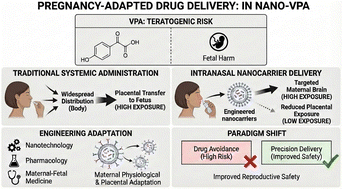
Valproic acid (VPA) is a potent antiseizure medication and mood stabilizer, yet its teratogenicity severely limits safe use during pregnancy. Despite guidelines advising against VPA use in women of reproductive age, it remains indispensable for certain drug-resistant epilepsies, highlighting the urgent need for safer and more targeted delivery strategies. Intranasal (IN) administration via nanocarriers represents a promising approach to enhance brain uptake while minimizing systemic exposure and placental transfer. In this review, we evaluate the scientific rationale and translational potential of IN nanoformulations of VPA specifically designed for use during pregnancy. We discuss strategies to engineer nanocarriers that achieve effective maternal brain delivery while reducing fetal risk, and we analyze preclinical data on biodistribution, placental passage, and therapeutic efficacy. Importantly, we highlight how gestational changes in maternal physiology and placental architecture can inform the rational design of pregnancy-adapted nanocarriers. By integrating insights from nanotechnology, pharmacology, and maternal-fetal medicine, this review outlines a paradigm shift from drug avoidance to precision delivery that maximizes reproductive safety. This strategy not only addresses the unmet need for safer VPA use in pregnancy, but also establishes a versatile framework for broader applications of nanomedicine in neurological and systemic disorders in women of childbearing age.
 Please wait while we load your content...


