


 PLATFORM UPDATE:

Formulation and evaluation of a Tridax procumbens-loaded phospholipid complex (phytosome) gel for wound healing and antimicrobial activities

Abstract
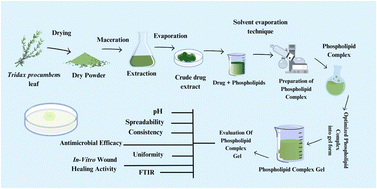
Tridax procumbens is a widely recognized medicinal plant known for its remarkable antimicrobial and wound-healing effects. Nevertheless, its therapeutic efficacy is often restricted due to low bioavailability. This study aimed to formulate and evaluate a Tridax procumbens-loaded phospholipid complex (phytosome) gel to enhance its transdermal delivery and therapeutic efficacy. The optimization of the phytosomal gel was conducted using a central composite design, where soy lecithin and cholesterol were the primary independent variables affecting particle size and entrapment efficiency. The ideal formulation showed a particle diameter of 460.2 nm and a loading capacity of 93.14%, ensuring improved permeation and prolonged drug release. Antimicrobial studies demonstrated improved efficacy against E. coli, with the phospholipid complex gel exhibiting a zone of inhibition (ZOI) of 32 mm, compared to 28 mm for the ethanolic extract and 30 mm for the standard drug amikacin. In vitro wound healing studies using L929 fibroblast cells showed that the phospholipid complex gel achieved 54.34% wound closure after 48 hours, compared to 41.57% for the ethanolic extract and 87.53% for the standard drug cipladine. These results suggest that the phospholipid complex (phytosome) system significantly enhances the bioavailability and therapeutic potential of Tridax procumbens for wound healing and antimicrobial applications.
 Please wait while we load your content...


