


 PLATFORM UPDATE:


Enzyme-catalysed synthesis of pyridines from biomass-derived feedstocks

Abstract
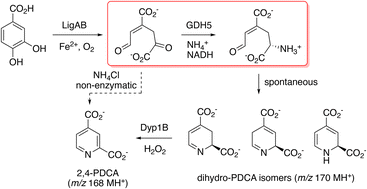
Pyridines are found in many pharmaceuticals and agrochemicals, but are synthesised from fossil fuel conversion. 2,4- and 2,5-pyridinedicarboxylic acids have been reported as products from bioconversion of renewable lignin feedstocks using engineered strains of Rhodococcus jostii RHA1 (Z. Mycroft et al., Green Chem., 2015, 17, 4974–4979), but previously it has been uncertain whether the formation of the pyridine ring was assisted by enzyme catalysis. The 4,5-extradiol ring fission product of protocatechuic acid, 4-carboxy-2-hydroxymuconate 6-semialdehyde (CHMS) shows structural similarity to α-ketoglutaric acid, the substrate for reductive amination by glutamate dehydrogenase (GDH). Testing of five glutamate dehydrogenase (GDH) isozymes from R. jostii RHA1 revealed that GDH5 catalyses NADH-dependent reductive amination of CHMS, and its cyclisation to form a dihydropyridine product. The dihydropyridine can be oxidised to 2,4-pyridinedicarboxylic acid using recombinant P. fluorescens dye-decolorizing peroxidase DyP1B, providing a route to substituted pyridines from a renewable feedstock.
 Please wait while we load your content...


