


 PLATFORM UPDATE:


C-terminally engineered nucleopeptide-based soft materials exhibiting antibacterial and antifungal efficacy against multi-drug-resistant strains

Abstract
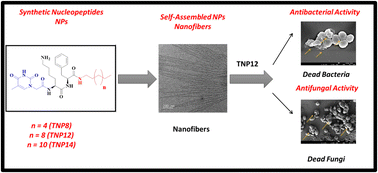
We report a series of self-assembled thymine-conjugated nucleopeptides with the modulation of C-terminal fatty acyl chains that exhibit potent antibacterial and antifungal properties while showing negligible cytotoxicity toward human cells. These thymine-conjugated nucleopeptides were designed, synthesized and self-assembled in Milli-Q water (pH 6.9). Field emission gun transmission electron microscopic (FEG-TEM) data corroborated that these self-assembled nucleopeptides form nanofibers in Milli-Q water. Furthermore, these self-assembled nucleopeptides are potent antibacterial and antifungal scaffolds against multidrug-resistant, clinically isolated bacterial and fungal strains. Detailed mechanistic studies revealed that these self-assembled nucleopeptides can permeabilize both bacterial and fungal membranes, thereby disrupting membrane integrity and causing microbial cell lysis, while also inducing the generation of reactive oxygen species (ROS) that contributes to the death of the microbial cells. Notably, the MTT cytotoxicity assay (using HEK-293 cells) and haemolytic assay (using human blood samples) revealed that these nucleopeptides have negligible cytotoxicity toward human cells and thus these can be used as potent antimicrobial therapeutics to combat antimicrobial-resistant pathogens. Interestingly, this report vividly established the comparative efficacy of self-assembled nucleopeptides as potent antibacterial and antifungal scaffolds with non-significant cytotoxicity to human cells. Thus, this study convincingly demonstrates a distinct structure–function correlation, establishing a rational framework for designing next-generation antimicrobial therapeutics.
 Please wait while we load your content...


