


 PLATFORM UPDATE:


A hydrido-alkynyl-Prins cyclization using isopropanol as a hydride donor: discovery, scope and mechanistic study

Abstract
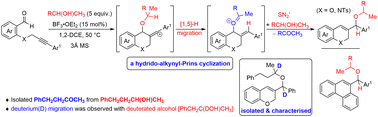
The alkynyl-Prins cyclization is a very important strategy in organic synthesis for the construction of cyclic frameworks and natural products, via a vinyl carbocation intermediate under acid catalysis. Surprisingly, the alternate alkynyl-Prins cyclization (between an alkyne-tethered aldehyde/ketones and an external alcohol) has been less explored. Herein, we have designed and developed an unprecedented hydrido-alkynyl-Prins cyclization, which involves an alternate alkynyl-Prins cyclization, [1,5]-hydride migration, and SN2′ nucleophilic substitution cascade. In this reaction, various alcohols, such as isopropanol, were employed as hydride donors. A broad scope has been observed for the alkyne-aldehydes and alcohols, for the construction of the corresponding chromenes, 1,2-dihydroquinolines, and phenanthrenes, by respectively employing oxygen, nitrogen and carbon tethered alkyne-carbaldehydes. Performing an experiment with a deuterated sec-alcohol and isolating the corresponding di-deuterated ether and ketone supported the proposed mechanism involving a [1,5]-hydride migration. When the reaction was performed in the presence of H218O, the enhanced yield of the ketone (58% from 13%) and the presence of 18O in it (HRMS-analysis) clearly suggested the formation of the ketone, possibly via the competitive trapping of the vinyl carbocation by water.
 Please wait while we load your content...


