


 PLATFORM UPDATE:


Molecular interactions of cinnamyl and quinoxaline derivatives with Bcl-2 antiapoptotic proteins: a computational study
 *c
and
*c
and
Abstract
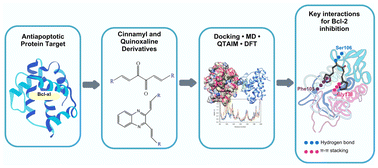
Antiapoptotic proteins represent a major obstacle to the success of anticancer therapies, as they promote the survival of malignant cells and contribute to treatment resistance. Among these, Bcl-2 and Bcl-xl are frequently overexpressed in pancreatic cancer, making them important therapeutic targets. In this work, we present a systematic computational study aimed at identifying the molecular features that enable selected cinnamyl and quinoxaline derivatives to inhibit the oligomerization of these proteins. Using a combination of molecular docking and molecular dynamics simulations, we characterized the most plausible binding modes and assessed the stability of the resulting complexes. Key intermolecular interactions responsible for binding were analyzed using the Quantum Theory of Atoms in Molecules (QTAIM), while reactivity descriptors derived from temperature-dependent chemical reactivity theory were employed to rationalize trends in affinity and stability. Our results reveal consistent structural and electronic patterns that govern the effective inhibition of Bcl-2 and Bcl-xl, providing mechanistic insight into their molecular recognition processes. Beyond improving the understanding of antiapoptotic protein inhibition, this study offers practical guidelines for the rational design of new small-molecule inhibitors with potential anticancer activity.
- This article is part of the themed collection: Celebrating Latin American Chemistry
 Please wait while we load your content...


