


 PLATFORM UPDATE:


FLARE: a label-free fluorescence-assisted method for RNA engineering of three-way junctions
 *ab
*ab
Abstract
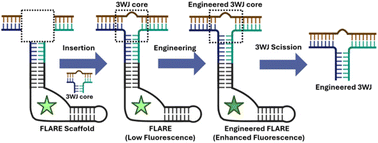
RNA three-way junction (3WJ) motifs are important structural elements found in the majority of RNAs, and the thermal stability of these structural motifs is crucial in determining RNA's biological roles and functions. Engineering these RNA motifs for better stability would enhance the native folding of RNA and is believed to enhance RNA's functionality. However, there are no high-throughput methods reported in the literature to engineer RNAs. Here, we report a label-free, FLuorescence-Assisted method for RNA Engineering (FLARE) utilizing the light-up aptamer Baby Spinach and the highly stable pRNA 3WJ derived from the Phi29 bacteriophage. The generated FLARE scaffold could be used to engineer almost any RNA three-way junction, which is ubiquitously found in natural RNAs. Using FLARE, we engineered a 5S 3WJ of ribosomal RNA to enhance its thermal stability significantly, even more than the highly stable pRNA 3WJ. The engineered 5S 3WJ was further introduced into single guide RNA (sgRNA) of the CRISPR–Cas9 system to enhance its cleavage efficiency significantly and was also shown to form an RNA nanotriangle for therapeutic applications. The FLARE design is general in nature and could be used to engineer 3WJs found in natural or unnatural functional RNAs such as ribozymes, riboswitches or aptamers, and even would be helpful in engineering 3WJs found in various newly discovered RNAs, the functions of which are currently unknown, to understand their folding and function.
 Please wait while we load your content...


