


 PLATFORM UPDATE:


Optically active dihydro-1,4-benzoxazines: synthetic, separation, and enzymatic approaches

Abstract
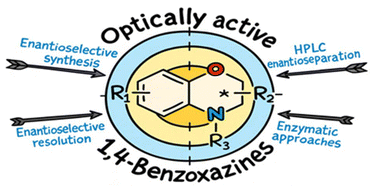
Benzoxazine-based compounds, a class of heterocycles with diverse biological properties, hold strong potential in therapeutic areas such as anti-inflammatory, anti-cancer, anti-tuberculosis and anti-microbial treatments. In the pharmaceutical field, many drugs are administered in racemic form, although in most cases, only one enantiomer is responsible for the desired therapeutic effect. The aim of this review is to summarize the various enantioselective synthetic strategies developed to obtain dihydro-1,4-benzoxazine derivatives, with particular emphasis on approaches such as catalytic hydrogenation, intramolecular cyclization and cycloaddition. Additionally, alongside enantioselective synthetic approaches, racemic mixtures can be separated into their individual enantiomers, most notably by chiral high-performance liquid chromatography (HPLC). All of these strategies aim to optimize access to enantiomerically pure compounds with well-defined absolute configurations, thereby paving the way for more targeted and effective therapeutic developments.
 Please wait while we load your content...


