


 PLATFORM UPDATE:


An interface engineered ZnO/rGO/Au NPs@MoS2 heterojunction for enhanced photoelectrochemical DNA sensing

Abstract
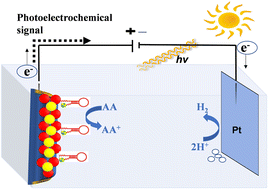
The conventional polymerase chain reaction (PCR) method for DNA detection suffers from limited sensitivity and linearity, restricting its application to samples with molar concentrations above 10−2 mmol. Here, we report a highly sensitive photoelectrochemical (PEC) biosensor for detecting the PML/RARA fusion gene, a key biomarker of acute promyelocytic leukemia (APL). A biosensing interface was constructed using an 18-mer single-stranded DNA probe immobilized on a ZnO/rGO/Au NPs@MoS2 heterojunction. The integration of three-dimensional ZnO nanoflowers with ultrathin MoS2 nanosheets not only suppresses photogenerated electron–hole recombination but also enhances light absorption across the ultraviolet-visible (UV-vis) spectrum, thereby improving photoelectric conversion efficiency. Incorporating reduced graphene oxide (rGO) effectively reduces interfacial resistance between ZnO and MoS2, while plasmonic Au nanoparticles (Au NPs) facilitate the absorption of visible light and the charge transfer through localized surface plasmon resonance (SPR) effects. During target recognition, a CdSe quantum dot (QD)-labeled reporter DNA(rDNA) hybridizes with the target DNA (tDNA), which specifically binds to the surface-anchored capture probe. The formation of a DNA duplex and subsequent assembly of CdSe QDs alter interfacial charge transfer and induce steric and electrostatic hindrance, leading to a concentration-dependent drop in photocurrent. Under optimized conditions, the biosensor exhibits a broad linear detection range from 100 fM to 1 μM and an ultralow limit of detection (LOD) of 1.9 fM, surpassing those of many previously reported DNA sensing platforms. Finite-difference time-domain (FDTD) simulations further confirm the contribution of plasmonic enhancement to the improved photoelectric response. This work presents a robust strategy for constructing advanced heterojunction photoelectrodes and provides a promising PEC platform for ultrasensitive biomarker detection in bioanalysis and clinical diagnostics.
 Please wait while we load your content...


