


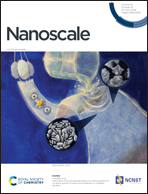
An interface-engineered HMS/PANI thermoelectric device for 3D printer waste heat harvesting

Abstract
The development of flexible, high-performance thermoelectric materials is necessary due to the growing demand for sustainable energy conversion from waste heat sources. In this work, we present higher manganese silicide/polyaniline (HMS/PANI) composite thin films that exhibit a hierarchical interface design, which partially decouples the typically interrelated thermoelectric parameters for waste heat recovery from working 3D printers. Structural characterization studies – XRD and SEM – confirm the well-dispersed HMS network with good interfacial quality. Through systematic composition optimization, we achieved enhanced electrical conductivity, 438 S m−1, and a simultaneous increase in the Seebeck coefficient of 72 μV K−1 at 80% HMS content. This enhancement results from hierarchical composite engineering, achieved by percolation-driven charge transfer at HMS/PANI interfaces and energy filtering effects, which also increase carrier concentration. The optimized composition exhibits an enhanced power factor of 2.3 μW (mK2)−1. Phonon engineering suppresses the lattice thermal conductivity relative to pure PANI, thereby maximizing the thermoelectric performance of composites. I–V characterization confirms the ohmic transport behaviour across all compositions. Device output characterization demonstrates a maximum power generation of 0.33 nW at ΔT = 70 K. Real-time application demonstration on an operating 3D printer reveals stable performance by generating 6–8 mV output, validating its functionality for autonomous IoT energy harvesting systems. This work establishes HMS/PANI composites as a flexible thermoelectric material where sophisticated composite design transcends individual phase limitations, paving the way for practical thermoelectric energy harvesting from diverse waste heat sources.

 Please wait while we load your content...


