


 PLATFORM UPDATE:


iRGD-engineered exosomes mediate siMYC delivery for effective tumor suppression in triple-negative breast cancer
Abstract
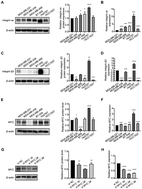
Triple-negative breast cancer (TNBC) is an aggressive cancer with a poor prognosis. MYC overexpression drives tumor progression, but the lack of an efficient siMYC delivery system remains a major challenge. Exosomes (Exos), as biocompatible nanocarriers, offer a solution. Here, we engineered internalizing RGD peptide (iRGD)-Exos to enhance siMYC delivery and improve therapeutic efficacy. iRGD-Exos were generated by transfecting FreeStyle™ 293-F (293-F) cells with an iRGD-Flag-Lamp2b plasmid, followed by ultracentrifugation and isolation. siMYC was loaded via electroporation. Exosomes were characterized, and their uptake efficiency was measured. CCK-8 assays and flow cytometry were conducted to analyze the effects of exosomes on the proliferation and apoptosis of TNBC cells. Apoptosis staining was also conducted on patient-derived organoids (PDOs). In a TNBC xenograft mouse model, fluorescence imaging, tumor volume measurement, and histological analysis were conducted to assess tumor targeting and therapeutic effects of engineered exosomes. Systemic toxicity was evaluated based on hematological, biochemical, and histopathological analyses. The iRGD modification significantly enhanced the uptake efficiency of exosomes by αvβ3 integrin-positive Hs578T TNBC cells. Following siMYC loading via electroporation, iRGD-Exos-siMYC markedly suppressed the proliferation of TNBC cells and induced their apoptosis. Additionally, it promoted apoptosis in PDOs, further supporting its antitumor potential. In vivo, iRGD-Exos-siMYC exhibited superior tumor-targeting capability, effectively inhibiting tumor growth and significantly downregulating MYC expression. Moreover, biosafety evaluations confirmed that iRGD-Exos-siMYC possesses good biosafety. This study demonstrated that iRGD-modified exosomes can effectively deliver siMYC to TNBC cells, enhancing gene silencing and antitumor efficacy. The targeted exosomal drug delivery system showed high tumor selectivity and minimal systemic toxicity. These findings provide new insights into exosome-based gene therapy and highlight the value of iRGD-Exos-siMYC as a novel treatment strategy for TNBC.
 Please wait while we load your content...


