


 PLATFORM UPDATE:

A TA–APTES coating as a chemical playground: engineering the shift from chemical traits to bactericidal power in superhydrophobic PU sponges
 *c
*c
Abstract
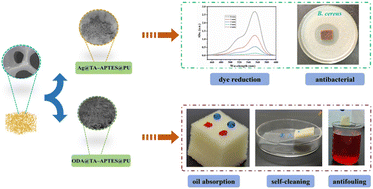
The intricate contaminants in wastewater, such as organic dyes, pathogenic bacteria, and immiscible oils, have led to significant environmental challenges. These pollutants are detrimental to both ecological systems and human well-being and cannot be effectively removed through wastewater purification using a single material or process. To address this issue, a multifunctional three-dimensional porous polyurethane (PU) sponge was designed. In this research, surface coating technology was applied to modify PU sponge through a facile impregnation method with the addition of a mixed solution containing tannic acid (TA) and aminopropyltriethoxysilane (APTES). Owing to the presence of secondary active reaction sites in the TA–APTES coating, TA–APTES@PU could function as a reactive substrate, facilitating subsequent modifications. TA–APTES@PU was first directly immersed in silver ammonium solution for the reduction of silver ions. Ag nanoparticles can be uniformly distributed and immobilized in situ on TA–APTES@PU, which was accomplished by the residual hydroxyl groups in the TA–APTES coating. The resultant Ag@TA–APTES@PU showed superior catalytic activities in the reduction of organic dye contaminants in aqueous solutions, achieving complete degradation of RhB within 4 minutes, with an apparent rate constant (kapp) of 1.1829 min−1. Ag@TA–APTES@PU also showed excellent antibacterial activities against both gram-positive and gram-negative pathogenic bacteria. TA–APTES@PU was subsequently modified with a low-surface-energy chemical octadecylamine (ODA), converting the TA–APTES coating directly into a superhydrophobic coating (ODA@TA–APTES@PU), which was suitable for treating oily wastewater. Furthermore, Ag@TA–APTES@PU and ODA@TA–APTES@PU also exhibited remarkable recyclability in the context of dye reduction and oil–water separation, respectively. The results indicated that the TA–APTES coating could serve as an excellent platform for the fabrication of multifunctional materials with desirable properties, making it a highly potential option for the treatment of water contaminated by dyes, bacteria, and oils.
 Please wait while we load your content...


