


 PLATFORM UPDATE:

Efficient photocatalytic conversion of CO2 to acetic acid using a composite catalyst

Abstract
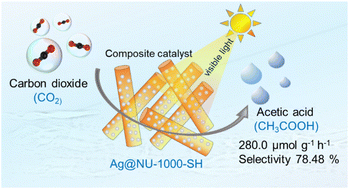
Transforming CO2 into high-value chemicals is crucial for combating the rising threats of global warming and energy-related problems. The selective generation of C2 or C2+ products via CO2 photoreduction is a complex endeavor, largely hindered by the sluggish kinetics of C–C bond formation. We highlight the potential of incorporating silver nanoparticles (Ag NPs) into the metal–organic framework (MOF) NU-1000-SH, which can harness light energy and promote efficient electron transfer. The local structure of silver nanoparticles on thiol-functionalized NU-1000 was studied utilizing atomic pair distribution function (PDF) analysis. The selective C2 product, acetic acid, is produced by Ag@NU-1000-SH under white light (30 W) without the use of sacrificial agents. The product analysis was confirmed by NMR, HRMS, and 13CO2 labelling experiments. The catalyst demonstrated a good acetate yield of 280.0 μmol g−1 h−1, with a selectivity rate of 78.48%. The findings from XPS and DFT calculations indicate that the charge-polarized states in the as-synthesized catalyst act as asymmetric centers that enhance the C–C coupling reaction. This observation is pivotal for advancing our knowledge of catalytic behavior. Additionally, the integration of experimental techniques, such as in situ DRIFT studies, with theoretical models provides a comprehensive understanding of the C–C coupling mechanism involving COOH* intermediates.
- This article is part of the themed collection: The Changing Canvas of Nano
 Please wait while we load your content...


