


 PLATFORM UPDATE:

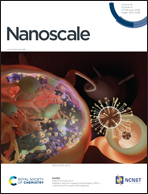
Dual pH-responsive pseudopeptide: hydrogelation and self-assembly into single- and multi-walled nanotubes
 *ab
Erica
Scarel,
a
Rita
De Zorzi,
a
Laura
Colomina-Alfaro,
c
Antonella
Bandiera,
c
Slavko
Kralj,
de
Davide
Porrelli,
c
Carlos
Peinador,
b
Marcos D.
García
*b
and
Silvia
Marchesan
*a
*ab
Erica
Scarel,
a
Rita
De Zorzi,
a
Laura
Colomina-Alfaro,
c
Antonella
Bandiera,
c
Slavko
Kralj,
de
Davide
Porrelli,
c
Carlos
Peinador,
b
Marcos D.
García
*b
and
Silvia
Marchesan
*a
Abstract
This work reports the heterochiral tripeptide L-Phe-D-Phe-L-Phe, N-capped with vermellogen, as an ionizable pseudopeptide hydrogelator, and how the pH-responsiveness is transferred from the molecular to the nanoscale, and all the way up to the macroscale through self-assembly. In particular, the protonation of the vermellogen moiety is responsible for hydrogelation, while that of the peptide fine-tunes the matrix nanostructure and viscoelastic properties. Electron microscopy reveals the correlation of varying viscoelastic properties with the nanostructure of the hydrogel matrices. Self-assembly of the pseudopeptide undergoes a peculiar evolution from nanofibers to nanotubes. This process depends on the degree of C-terminal deprotonation, notably with the gradual increase in the internal diameter of the resulting nanotubes as the deprotonation progresses to completion. State-of-the-art characterization techniques confirm that the nanostructured gels are predominantly comprised of parallel β-sheets as primary self-assembling motifs, arranging vermellogen units in a clockwise helical pattern, which minimizes electrostatic repulsions. The evolution from nanofibers to nanotubes appears to be driven by a long-range hydrogen bonding interaction, involving the hydrazone group and the deprotonated C-terminus of adjacent β-sheets. The potential biomedical application of the gels is demonstrated through the controlled release of a model anticancer drug, and in vitro cytocompatibility assays.

 Please wait while we load your content...


