


 PLATFORM UPDATE:

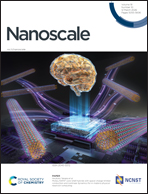
MoSe2/SWNT core–shell hybrids with space-charge-limited conduction and nonlinear dynamics for in-materio physical reservoir computing

Abstract
This study presents the synthesis, characterization, and application of molybdenum diselenide/single-walled carbon nanotube (MoSe2/SWNT) core–shell structures as a new platform for in-materio physical reservoir computing. The hybrid material was fabricated via a modified hydrothermal process, yielding a conductive SWNT network uniformly coated with semiconducting MoSe2. Structural and electrical characterization studies (XPS, XRD, SEM, TEM, I–V, and EIS) confirm a crystalline fibrous core–shell morphology that exhibits a voltage-driven transition from a capacitive high-resistance state to a space-charge-limited conduction (SCLC) regime. Physical reservoir computing based on MoSe2/SWNTs thus leverages SCLC dynamics, where trap-controlled transport generates higher harmonics and short-term memory, providing the essential nonlinearity and fading memory required for temporal processing. Consequently, the MoSe2/SWNT device achieves strong performance in benchmark tasks, including waveform reconstruction (NMSE < 0.1 across multiple periodic functions), NARMA2 time-series prediction (90% accuracy), and memory capacity evaluation. These results establish a direct link between device physics and computational capability, highlighting MoSe2/SWNT hybrids as a scalable candidate for next-generation neuromorphic hardware.

- This article is part of the themed collection: Nanoscale Covers
 Please wait while we load your content...


