


 PLATFORM UPDATE:

Chitosan conjugated cyclodextrin nanocomposite loaded with antibiotic-adjuvant combinations remediates multi-drug resistant Staphylococcus aureus infection in CD-1 mice model of bovine mastitis
 ab
ab
Abstract
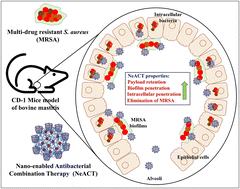
Bovine mastitis (BM), resulting from intramammary infection, is one of the costliest diseases in animal agriculture. Occasional treatment failure and bacterial persistence in the mammary gland demand alternate therapeutic approaches. Nanotechnology-enabled Antibacterial Combination Therapy (NeACT), which utilizes nanomaterials to co-deliver more than one drug molecule with synergistic and complementary antibacterial mechanisms, holds promise for BM treatment. Here, we developed a NeACT constituting ceftiofur (CF) loaded chitosan nanoparticles conjugated with chlorpromazine (CPZ) and tannic acid (TA) loaded cyclodextrin nanoparticles. CF, CPZ, and TA showed a synergistic antibacterial action (FICI = 0.49) against a methicillin-resistant Staphylococcus aureus strain (Sa1158c) isolated from BM. NeACT demonstrated colloidal stability, biocompatibility, and slow-release of payloads and showed a significant reduction in Sa1158c efflux pump (by ∼15.53-fold) and biofilm-forming (by ∼3.40 log10) abilities. It showed low immunogenicity and no adverse effect on the mammary tissues of CD-1 lactating mice in a mastitis model. NeACT of ≥3.90 µg mL−1 demonstrated ≥3.20 log10 reduction of internalized Sa1158c in epithelial cells in vitro, while NeACT of 39 µg per gland showed ≥4.46 log10 remediation of Sa1158c from infected mice. Overall, NeACT successfully reduced the effective concentration of CF, CPZ, and TA and overcame Sa1158c CF resistance. These desirable therapeutic characteristics warrant its application for treating BM.
 Please wait while we load your content...


