


 PLATFORM UPDATE:


Properties of AgNPs stabilized with polyvinylpyrrolidone relevant to antidiabetic agents
 a
Antonio
Alvarez de la Paz,
b
Nina
Bogdanchikova,
*c
Alexey
Pestrykov,
d
Juan José
Acevedo Fernández
e
and
Maira Rubi
Segura Campos
*a
a
Antonio
Alvarez de la Paz,
b
Nina
Bogdanchikova,
*c
Alexey
Pestrykov,
d
Juan José
Acevedo Fernández
e
and
Maira Rubi
Segura Campos
*a
Abstract
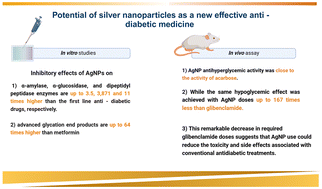
Type 2 diabetes mellitus (DM2) is a chronic metabolic disease. Silver nanoparticles (AgNPs) show promise in their treatment. This study assessed the potential of AgNPs as DM2 treatment agent using in vitro, in vivo, and machine learning approaches. Male Wistar rats were used to study antihyperglycemic effects, while male mice evaluated hypoglycemic effects. In vivo studies showed that AgNPs inhibited α-amylase, α-glucosidase, and dipeptidyl peptidase-4, up to 3.51, 3827.76, and 11 times more effective than acarbose and sitagliptin, respectively. Advanced glycation end products inhibition by AgNPs was up to 61.4 times higher than metformin. In vivo experiments revealed that AgNPs antihyperglycemic activities were close to acarbose, while the same hypoglycemic effect was achieved with AgNP doses up to 167 times lower than that of glibenclamide. The results show the possibility to decrease the glibenclamide dose by two orders, that indicates high AgNP perspective to reduce drug toxicity and side effects.
 Please wait while we load your content...


