


 PLATFORM UPDATE:

Sustainable carbon dot-based fluorosensor integrated with a microcontroller-driven portable device for on-site nanomolar detection of picric acid

Abstract
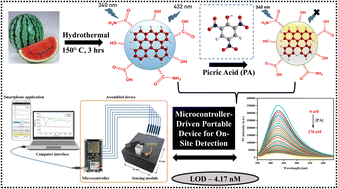
This study reports the development of a microcontroller-based, portable fluorometric sensing device for the rapid and highly sensitive detection of picric acid (PA), a hazardous nitroaromatic explosive. The sensor utilizes biomass-derived carbon dots synthesized from watermelon extract (Citrullus lanatus) via a sustainable, hydrothermal green synthesis route, free of toxic reagents or additives. The resulting water-soluble carbon dots (W-CDs) exhibit strong cyan fluorescence under UV light with a high quantum yield of 29%. Comprehensive characterizations using FTIR, XRD, HRTEM, Raman, XPS, UV-Vis, steady-state, and time-resolved fluorescence spectroscopy, confirmed their structural, morphological, and optical properties. These W-CDs serve as an effective “turn-off” fluorescent probe for PA, achieving an ultra-low detection limit of 4.17 nM in aqueous solution. The integration of W-CDs into a portable device enables real-time, on-site detection, with results closely matching standard laboratory measurements. Selectivity studies confirmed minimal interference from other analytes in complex samples. Additionally, an AND logic gate was implemented using the fluorescence response, highlighting the system's potential for intelligent chemical sensing. This work demonstrates the integration of eco-friendly nanomaterial synthesis with low-cost device engineering, offering a practical platform for environmental monitoring and explosive detection.
- This article is part of the themed collection: Celebrating International Women’s day 2026: Women in Nanoscience
 Please wait while we load your content...


