


 PLATFORM UPDATE:

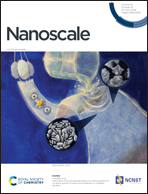
Surfactant-templated syntheses of nanostructured high-entropy spinel oxide electrocatalysts and effects on water-splitting

Abstract
The production of clean and affordable hydrogen energy relies on the development of affordable, efficient, and durable bifunctional electrocatalysts for overall water-splitting. In this research, a quinary high-entropy inverse spinel oxide, (CoCuFeMnNi)3O4, was prepared via the reverse co-precipitation method, employing different surfactants as templates, namely, PVP, SDS, and CTAB. XRD, SEM, XPS, and HRTEM were employed to analyze the structure, morphology, and other properties of (CoCuFeMnNi)3O4. The effects of the different surfactants on the properties and electrocatalytic performance of (CoCuFeMnNi)3O4 in water-splitting reactions (HER/OER) were discussed. The results show that different surfactants influence the dispersion, surface area, and other properties of the synthesized (CoCuFeMnNi)3O4 particles. The electrochemical test results of the HER and OER were compared. Due to the superior performance of the PVP-assisted (CoCuFeMnNi)3O4 in the HER and OER, PVP was selected as the surfactant of choice. From the metal salt-to-PVP ratio studies, HESOx with 1 wt% PVP as a synthesis template (HESOxPVP 1%) exhibited the best performance of all, requiring an overpotential of 16 mV to reach 10 mA cm−2 in HER and 381 mV to reach 10 mA cm−2 in the OER. The effects of the presence and absence of Cu on the HER and OER are also investigated. Quaternary MESOx ((CoFeMnNi)3O4) is compared to HESOx. Cu is observed to increase the SSA and ECSA of HESOx, giving it superior initial HER/OER performance. However, it suffers active site losses due to the ready formation of cuprous oxide (Cu2O), leading to sluggish electrocatalysis at higher overpotentials. In the two-electrode test, HESOx reaches 10 mA cm−2 at an overpotential of ca. 0.267 V, compared to the 0.43 V required by (MESOx). However, MESOx shows a remarkably superior performance than HESOx, improving by 130 mV after 100 h of activity.

- This article is part of the themed collection: Nanoscale Covers
 Please wait while we load your content...


