


 PLATFORM UPDATE:


Nature-inspired interface fluid behaviors, superhydrophobic material design, and droplet dynamics: a systematic review
 *a
*a
Abstract
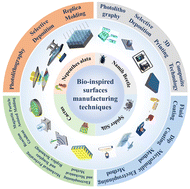
The growing scarcity of freshwater resources has become a global challenge, driven by population growth, economic development, and climate change. Conventional water-harvesting techniques typically require substantial energy and are challenging to manage, highlighting the urgent need for innovative, material-engineered, energy-efficient, and sustainable solutions. Fog harvesting offers a promising solution to the urgent issue of water scarcity. This review thoroughly explores the natural methods of fog harvesting, focusing different biomimetic micro- and nano-structures that govern droplet coalescence, transport and capture. Superhydrophobicity and polymer polarity are highlighted as ways to enhance fog collection through effective droplet movement and low adhesion. There is a discussion of the function of primary polymers in relating molecular polarity to surface durability and wettability. Recent advancements in bioinspired fiber production highlight advanced fabrication techniques that demonstrate significant potential for developing effective artificial water-harvesting materials. The study further assesses hybrid surfaces created with selective wettability patterns and composite materials, evaluating their effectiveness in improving droplet capture, transport, and merging. This paper addresses bioinspired surfaces with special wettability, concentrating on how various fabrication methods, design strategies and mechanisms translate and apply from laboratory to real-world applications, while also addressing challenges like scalability, environment resistance and durability. By integrating biological knowledge with materials science and engineering fabrication, this research lays the groundwork for developing next-generation fog-harvesting devices that can sustainably tackle global water shortages.
- This article is part of the themed collections: Recent Review Articles and 2026 Nanoscale HOT Article Collection
 Please wait while we load your content...


