


 PLATFORM UPDATE:

Glycosylated mycotoxins: a hidden enemy

Abstract
Covering: 2010 up to 2025 (May)
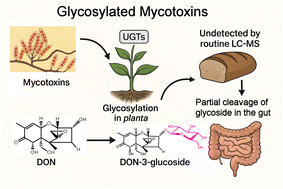
Mycotoxins, secondary metabolites produced by filamentous fungi, are highly toxic contaminants of food crops. These contaminated plants pose a significant health risk to livestock and humans. Cereals are the main source of dietary mycotoxin intake in the EU and are often contaminated with Fusarium mycotoxins. After fungal infection, mycotoxins are produced and further modified by plant enzymes. The most common mechanism of modification of Fusarium mycotoxins and other mycotoxins is conjugation with glucose, but also with oligosaccharides and polysaccharides. Although this reduces their toxicity to the plant, enzymes in the gastrointestinal tract of animals or enzymes used in the food processing can hydrolyze the glycosidic bond, releasing the mycotoxin. While the analysis of free mycotoxins is routine, the quantification of mono-, oligo-, and polyglycosides is difficult or impossible, leading to an underestimation of the actual risk. Most conjugated mycotoxins cannot be routinely quantified as analytical standards are commercially unavailable. This review focuses in particular on the formation and occurrence of glycosylated mycotoxins and their effects on health and their transformations in the food chain. It summarizes and critically compares chemical, enzymatic, plant, and microbial glycosylation. Specific deglycosylation methods (both enzymatic and chemical) required for the evaluation of the content of respective mycotoxins are covered. Indirect quantification of modified mycotoxins using enzymatic hydrolysis methods and subsequent analysis of the free forms, typically performed by HPLC-MS, is discussed. The whole spectrum of mycotoxins, including those that are sometimes neglected in modern literature (typically ergot mycotoxins), is covered in a rather complex way.
 Please wait while we load your content...


