


 PLATFORM UPDATE:

The preparation of a PAA-DM/nickel foam interpenetrating network composite material and its application in oil–water separation
 *a
*a
Abstract
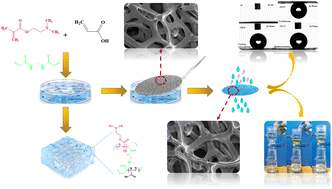
Oil–water separation in industrial production processes and the effective treatment of oil-contaminated wastewater are significant challenges in both process engineering and environmental management. Traditional oil–water separation materials often suffer from low separation efficiency, oil fouling and clogging, and poor mechanical stability. In this study, a novel hydrogel/nickel foam oil–water separation material with a stable interpenetrating network structure was successfully fabricated by preparing copolymer hydrogels of acrylic acid (AA) and dimethylaminoethyl methacrylate (DMAEMA) on the surface of three-dimensional porous nickel foam, which exhibit superhydrophilicity with a water contact angle of 0° and underwater superoleophobicity with an underwater oil contact angle exceeding 150°, demonstrating excellent oil–water separation performance. It achieves separation efficiencies greater than 99.0% for various oil–water mixtures, with a water flux as high as 50 000 L m−2 h−1. Due to its robust interpenetrating network structure, the material maintains high performance even after 30 cycles of separation. This work provides a novel design strategy for developing efficient, durable, and environmentally friendly oil–water separation materials.
 Please wait while we load your content...


