


 PLATFORM UPDATE:

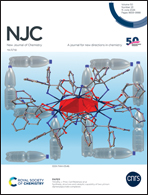
Docosahexaenoic acid-copper (DHA-Cu) complex catalysis: UV- activated aerobic oxidation via experimental and computational approaches
Abstract
A docosahexaenoic acid-copper (DHA-Cu) complex was synthesised and developed for its photocatalytic activity to effectively convert alcohols to aldehydes in aerobic oxidation processes. The DHA-Cu complex was characterised by using XRD, SEM, XPS, EPR, FT-IR, UV, and TGA-DTA techniques. The DHA-Cu complex absorbs UV photons, it creates electron-hole pairs, leading to the reduction of O2 under UV light. In the photocatalytic activity, DMPO was used as a spin drop reagent in EPR measurements to analyse the super radical production, which accelerates the transformation of alcohol into aldehyde, and the final product was verified using GC analysis. UV-Vis spectra shows the DHA-Cu complex absorbs at 274 nm with a band gap (4.5 eV), and HOMO-LUMO energy gap of 0.09 eV, the smaller HOMO-LUMO energy gaps enhanced the photocatalytic aerobic oxidation process. In this study, new catalysts were developed for the conversion of benzyl alcohol to benzaldehyde, which is a very useful technique and applicable for pharmaceuticals and agriculture, particularly in organic chemical transformations.
 Please wait while we load your content...


